

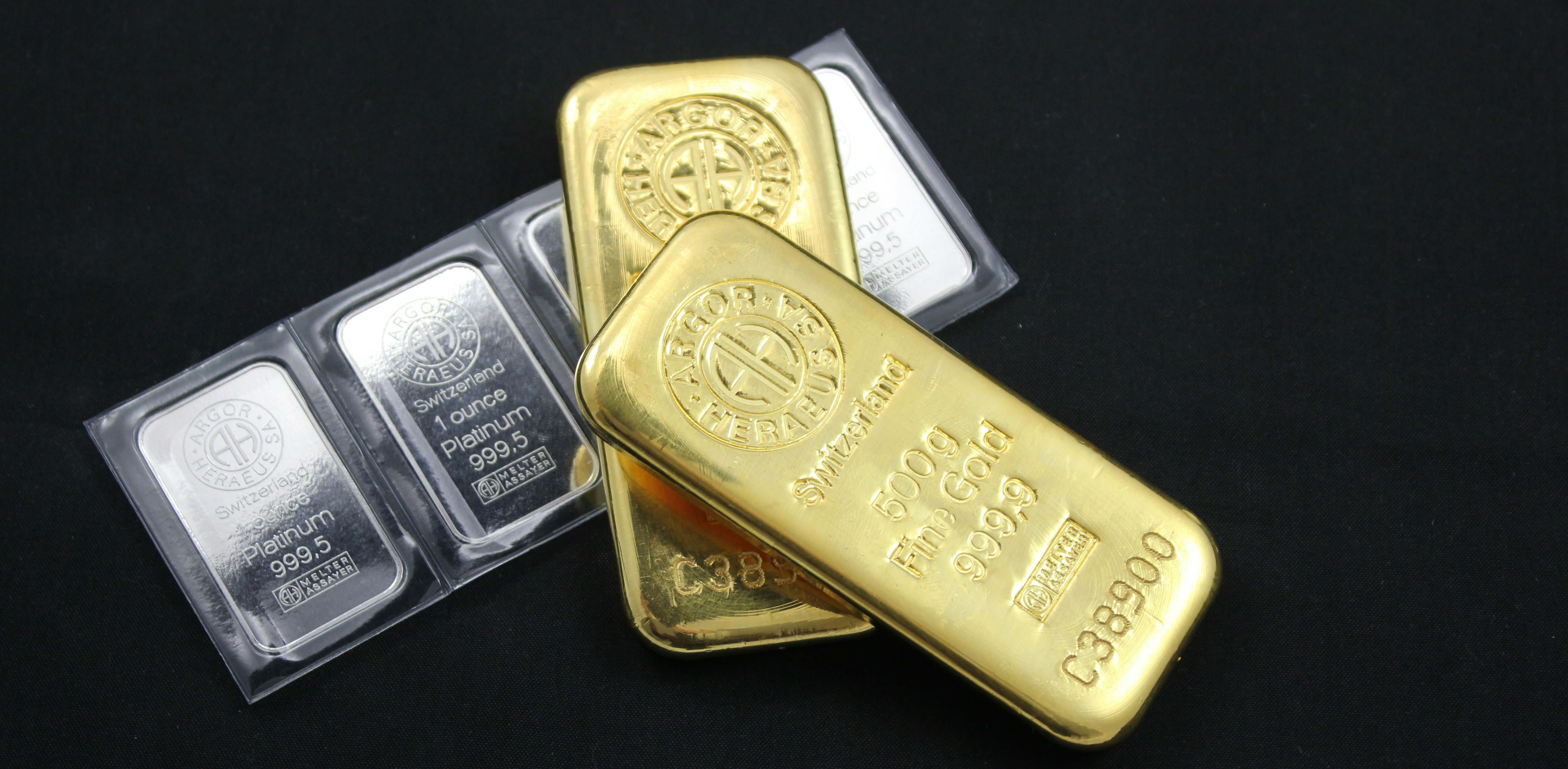
Gifts of Silver and Gold
Published by
Jeffrey Frye
on
Historically, most charitable gift annuities (CGAs) have been funded by cash donations. In some cases, however, donors prefer to use appreciated securities to establish their CGAs. This alternative approach certainly makes sense from a financial and tax perspective. Planned giving donors tend to have more accumulated wealth in appreciated stocks than in cash reserves. In addition, using appreciated securities to fund a gift annuity generally allows the donor to lessen the amount of realized capital gains for which they will be taxed. And in most cases, when the annuitant is the donor (or when the first of two annuitants is the donor), the amount of taxable capital gain may be spread ratably over the donor’s life expectancy. This means the donor pays tax on a lesser amount of capital gains AND that those taxable gains are divided up and reported in many smaller amounts over time.
But what happens when the donor wishes to establish a gift annuity using holdings of silver or gold? Are the benefits similar to using appreciated securities to fund CGAs? Turns out there are some similarities, but there are also significant differences.
As with any consideration of funding gift annuities using assets other than cash, we first have to look at the characteristics of those assets independently of any split-interest gift arrangement. Precious metals have never been a method of holding wealth for most Americans, but in recent years, they have become more popular. The biggest reason for the level of interest has been the rise of so called “exchange-traded funds” (ETFs). An individual can now invest in shares of an ETF that owns precious metals, and thus, the individual does not have to take physical possession of the metals.
Regardless of whether the donor holds coins, bullion, or shares of an ETF, the asset is considered to be tangible personal property. From our Gift Annuity Manual,
“Tangible personal property refers to an object that can be physically held, can be moved, and has intrinsic value, unlike stocks and bonds that have representative value.” [Chapter 16, pages 17 – 18]
Should the donor choose to make an outright gift to charity of the tangible personal property, the charitable deduction will depend on whether there is a related use of the asset. If the asset donated can be used in the mission or ongoing work of the organization, the charitable deduction would be for the appraised market value on the date of the gift. For example, a library could take in an outright gift of gold and use it to restore the gilt edges of medieval manuscripts, as that would be within the scope of the library’s mission. But, if the asset cannot be used in the mission or ongoing work of the organization and/or the charity sells the asset to fund its charitable enterprises, it is deemed to be for an unrelated use, and the charitable deduction would be the lesser of the appraised value and the cost basis. To use the same library example, if the gold is given and then sold by the library to fund the purchase of new bookshelves, that is an unrelated use.
For these reasons, the gift officer should exercise caution during any conversations about the potential charitable income tax deduction. Note, it would always be considered unrelated use if the charity were to accept the gift and then sell the asset within a specific period of time.
As is the case so often with CGAs, the tax aspects of funding a charitable gift annuity with tangible personal property, such as gold and silver, rest upon the discussion of an outright gift of the same asset. If the charitable deduction for an outright gift of tangible personal property is limited to only a portion of the appraised market value, then the charitable deduction for a split-interest gift funded by the same asset will be further limited. In other words, the deduction for the CGA will be a fraction of a fraction of the appraised market value. Clearly, these types of gifts should not be considered by donors chasing the highest possible income tax deductions.
Beyond discussions about the charitable deduction, gift officers also need to broach the topic of the taxation of any gift annuity payments. For a gift annuity funded with appreciated marketable securities, the payments are categorized as combinations of ordinary income, tax-free income, and long-term capital gains distributions. The tax treatment of the ordinary income and capital gains distributions are based on the standard income and capital gains tax rates. But for a gift annuity funded with tangible personal property, the taxation of ordinary income and capital gains is based on the unique tax rates for sales of tangible personal property, up to a maximum tax rate of 28%. [Note: our comments are based only on federal income and capital gains tax rates – considerations of state income and capital gains tax rates are beyond the scope of this discussion.]
In addition to the issues of the charitable income tax deduction and the tax treatment of the gift annuity payments, the donor and the charity will need to take special actions that are required for gifts of unusual assets. While we don’t believe gifts of ETFs require any additional measures, for gifts of coins and bullion, the donor will need a Contemporaneous Written Acknowledgement from the charity. That document should simply describe the coins and not state any dollar value.
The donor will also need a qualified appraisal and a Form 8283, which the charity must sign, acknowledging receipt of the coins. The Form 8283 will show both cost basis and appraised fair market value. The donor should also be made aware that the charity will be required to file Form 8282 reporting the proceeds from the sale if it occurs within three years. It has been our understanding that the IRS routinely compares the basis and FMV information from Form 8283 with the proceeds amounts on Form 8282. If there were ever a case for which the donor should consult with their own tax advisor, a gift of tangible personal property would definitely be that case.
Our review of possible gifts of silver and gold is not intended in any way to discourage planned giving professionals from engaging in conversations with donors about these potential contributions. There certainly are instances where, from the donor’s perspective, these assets represent the best choice for making a substantial gift to a charitable organization. We just want to share the most important considerations applying specifically to tangible personal property that are not relevant for gifts of long-term appreciated marketable securities.
And nothing else sparkles quite like silver and gold.